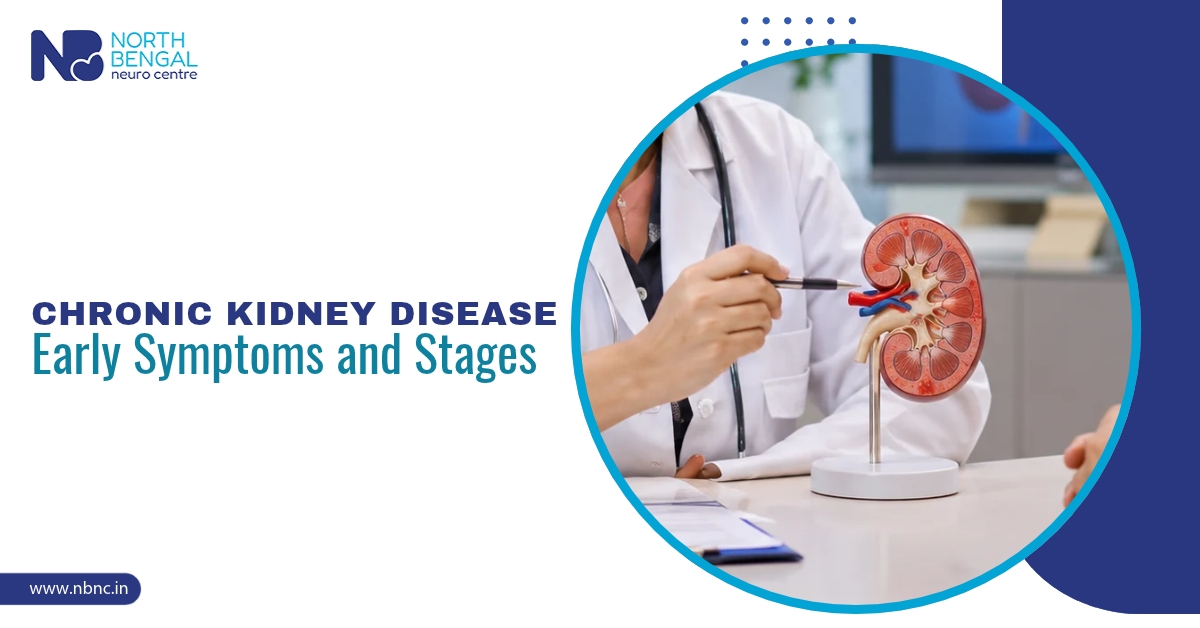



Kidney problems can develop without causing any noticeable changes in how you feel. This is often the case with chronic kidney disease (CKD), especially in its early stages. CKD occurs when kidney damage or changes in kidney function continue for at least three months and affect your health. To know more about this a Nephrologist in Siliguri might be consulted.
Over time, damaged kidneys may become less effective at filtering waste and extra fluid from your blood. You may notice changes in urination, swelling in your feet or unusual tiredness. These chronic kidney disease symptoms may not appear in everyone, and some people may have no symptoms at all.
The condition can progress through five stages, from mild kidney damage to kidney failure. Regular kidney tests help track your kidney function and check for any changes over time.
What Are the First Signs of CKD?
Common symptoms include:
- Frequent urination: You may need to urinate more often, particularly during the night.
- Foamy urine: Your urine may look foamy due to excess protein passing into it.
- Blood in urine: Your urine may have a pink, red or brown colour.
- Swelling in the feet and ankles: You may notice puffiness around your feet, ankles or lower legs.
- Constant tiredness: You may feel unusually weak or exhausted due to anaemia.
- Puffy eyes: You may notice swelling around your eyes, especially in the morning.
- Loss of appetite: You feel less interested in food than usual.
- Nausea: You may experience an upset stomach or feel like vomiting.
- Muscle cramps: You may experience cramps, particularly in your legs.
- Dry and itchy skin: Your skin may become unusually dry or itchy.
- Sleep problems: Frequent urination or restless legs may disturb your sleep.
- Difficulty concentrating: You find it harder to focus on everyday tasks.
These symptoms alone do not mean you have CKD. A doctor needs to assess your symptoms and test results to determine whether you have CKD.
What Are the Five Stages of Chronic Kidney Disease?
Doctors use the estimated glomerular filtration rate (eGFR) to classify CKD into five stages, from G1 to G5. It shows how well your kidneys remove waste from your blood.
Stage 1 CKD: Kidney Damage With Normal or High Filtration Rate
- eGFR: 90 or higher mL/min/1.73 m².
- Kidney filtration remains normal or high.
- Other signs of kidney damage, such as albumin in the urine, must also be present.
- Most people do not experience noticeable symptoms.
- Regular kidney function tests may be recommended.
Stage 2 CKD: Mildly Reduced Kidney Function
- eGFR: 60–89 mL/min/1.73 m².
- Kidney filtration is slightly reduced.
- Evidence of kidney damage is also needed to confirm CKD.
- Most people have no clear symptoms.
- Doctors may monitor kidney function and manage underlying conditions.
Stage 3 CKD: Moderate Reduction in Kidney Function
Stage 3 has two categories:
- Stage 3a: eGFR of 45–59 mL/min/1.73 m².
- Stage 3b: eGFR of 30–44 mL/min/1.73 m².
At this stage, some people may notice changes in their health, such as:
- Feeling tired or weak.
- Swelling in the feet and ankles.
- Changes in urination.
- Muscle cramps.
- Changes in blood pressure.
Doctors may also check for anaemia and mineral imbalances.
Stage 4 CKD: Severely Reduced Kidney Function
- eGFR: 15–29 mL/min/1.73 m².
- Kidney filtering capacity is significantly reduced.
- Symptoms may include nausea, itching, swelling and loss of appetite.
- Tiredness and other complications may become more noticeable.
- Doctors may discuss future treatment options, including dialysis or kidney transplantation.
Stage 5 CKD: Kidney Failure
- eGFR: Below 15 mL/min/1.73 m².
- The kidneys have severely reduced filtering capacity.
- Waste and excess fluid can collect in the body.
- Possible symptoms include nausea, vomiting, swelling, itching and severe tiredness.
- Some people may require dialysis or a kidney transplant.
Comparison of the Five CKD Stages
|
CKD stage |
eGFR (mL/min/1.73 m²) |
Kidney function |
|
Stage 1 (G1) |
90 or higher |
Normal or high, with kidney damage |
|
Stage 2 (G2) |
60–89 |
Mildly decreased, with kidney damage |
|
Stage 3a (G3a) |
45–59 |
Mildly to moderately decreased |
|
Stage 3b (G3b) |
30–44 |
Moderately to severely decreased |
|
Stage 4 (G4) |
15–29 |
Severely decreased |
|
Stage 5 (G5) |
Below 15 |
Kidney failure |
What Can Increase the Risk of Chronic Kidney Disease?
Common causes and risk factors include:
Diabetes:
Over time, diabetes can damage the kidneys and make it harder for them to filter waste from the blood.
High blood pressure:
High blood pressure over time can reduce the kidneys' ability to function properly.
Glomerulonephritis:
This condition causes inflammation in the tiny filtering units of the kidneys, which can affect their function.
Polycystic kidney disease:
This inherited condition causes fluid-filled cysts to develop in the kidneys and may affect kidney function.
Repeated kidney infections:
Having kidney infections repeatedly, especially severe ones, may damage the kidneys over time.
Kidney stones:
Kidney stones that keep coming back or block the flow of urine may affect kidney function.
Family history:
If kidney disease runs in your family, you may have a higher chance of developing certain kidney problems.
Heart disease:
Heart problems can affect the blood supply to your kidneys and may also affect how well they work.
Long-term use of certain medicines:
Taking certain painkillers too often or for a long time may harm your kidneys. These include non-steroidal anti-inflammatory drugs (NSAIDs).
Smoking:
Smoking can affect blood flow to the kidneys and may increase the risk of kidney damage.
Older age:
Kidney function may change with age, and the likelihood of developing CKD increases in older adults.
These risk factors may increase the chance of developing CKD, but they do not confirm the condition. If you have any concerns about your kidney health, speak with a doctor for proper advice.
How Is Chronic Kidney Disease Diagnosed?
Doctors may recommend different tests to check kidney function, identify kidney damage and assess possible complications.
Common tests include:
- Blood creatinine test
- Estimated glomerular filtration rate (eGFR) test
- Blood urea nitrogen (BUN) test
- Urine albumin-to-creatinine ratio (uACR) test
- Urine routine and microscopic examination
- Urine protein test
- Serum electrolyte test
- Serum calcium and phosphorus tests
- Complete blood count (CBC)
- Blood glucose test
- HbA1c test
- Blood pressure measurement
- Kidney ultrasound
- CT scan or MRI (when required)
- Kidney biopsy (when required)
Your doctor will review the test results and explain whether they indicate any kidney-related concerns.
When Should You See a Doctor for Possible Kidney Disease?
Speak with a doctor if you notice:
- Persistent swelling around your feet, ankles or face.
- Frequent changes in urination or foamy urine.
- Blood in your urine.
- Unexplained tiredness, loss of appetite or ongoing nausea.
- Abnormal kidney function or urine test results.
If you notice any of these changes, do not ignore them. Seek immediate medical attention, especially if you experience severe breathlessness, chest pain, confusion, fainting or a sudden reduction in urine output.
Can Chronic Kidney Disease Be Managed?
Chronic kidney disease (CKD) may not always be reversible. However, medical care and regular monitoring can help manage the condition and may slow its progression.
Doctors may recommend:
- Managing blood sugar and blood pressure.
- Following prescribed medicines and treatment.
- Reviewing medicines that may affect the kidneys.
- Making dietary changes when advised.
- Monitoring eGFR and urine albumin levels.
- Checking blood pressure regularly.
- Discussing dialysis or kidney transplantation when kidney function becomes severely reduced.
Attend scheduled appointments to discuss your kidney health and any changes you have noticed.
Conclusion
Chronic kidney disease can develop slowly, and you may not notice any changes in your health at first. As kidney function declines, symptoms such as swelling, tiredness, changes in urination and loss of appetite may appear.
Knowing the five stages of CKD and recognising chronic kidney disease symptoms can help you understand when to seek medical advice. If you have diabetes, high blood pressure or concerns about your kidneys, talk to your doctor about getting your kidney function checked.
Taking your medicines as prescribed, following your doctor's advice and keeping up with regular check-ups can help you manage CKD and look after your kidney health.
Frequently Asked Questions
What are the first signs of kidney disease?
Kidney disease often has no noticeable symptoms in the early stages. Some people may notice foamy urine, frequent urination, swelling in their feet or unusual tiredness as the condition progresses.
Which stage of kidney disease is the most serious?
Stage 5 is the most advanced stage of CKD. At this stage, kidney function is very low, and some people may need dialysis or a kidney transplant.
How do daily habits affect kidney health?
Smoking, eating too much salt, not staying physically active and having uncontrolled blood sugar or blood pressure can affect your kidney health.
Can damaged kidneys become healthy again?
Kidney damage may not always be reversible. Following your doctor's advice, taking prescribed medicines and making necessary changes to your diet and daily habits can help manage the condition.
How can I clean my kidneys naturally?
Your kidneys remove waste and excess fluid from your blood every day. No special drink or home remedy can clean your kidneys. Drinking enough water and eating a balanced diet are good habits, but people with CKD may need specific dietary advice from their doctor.